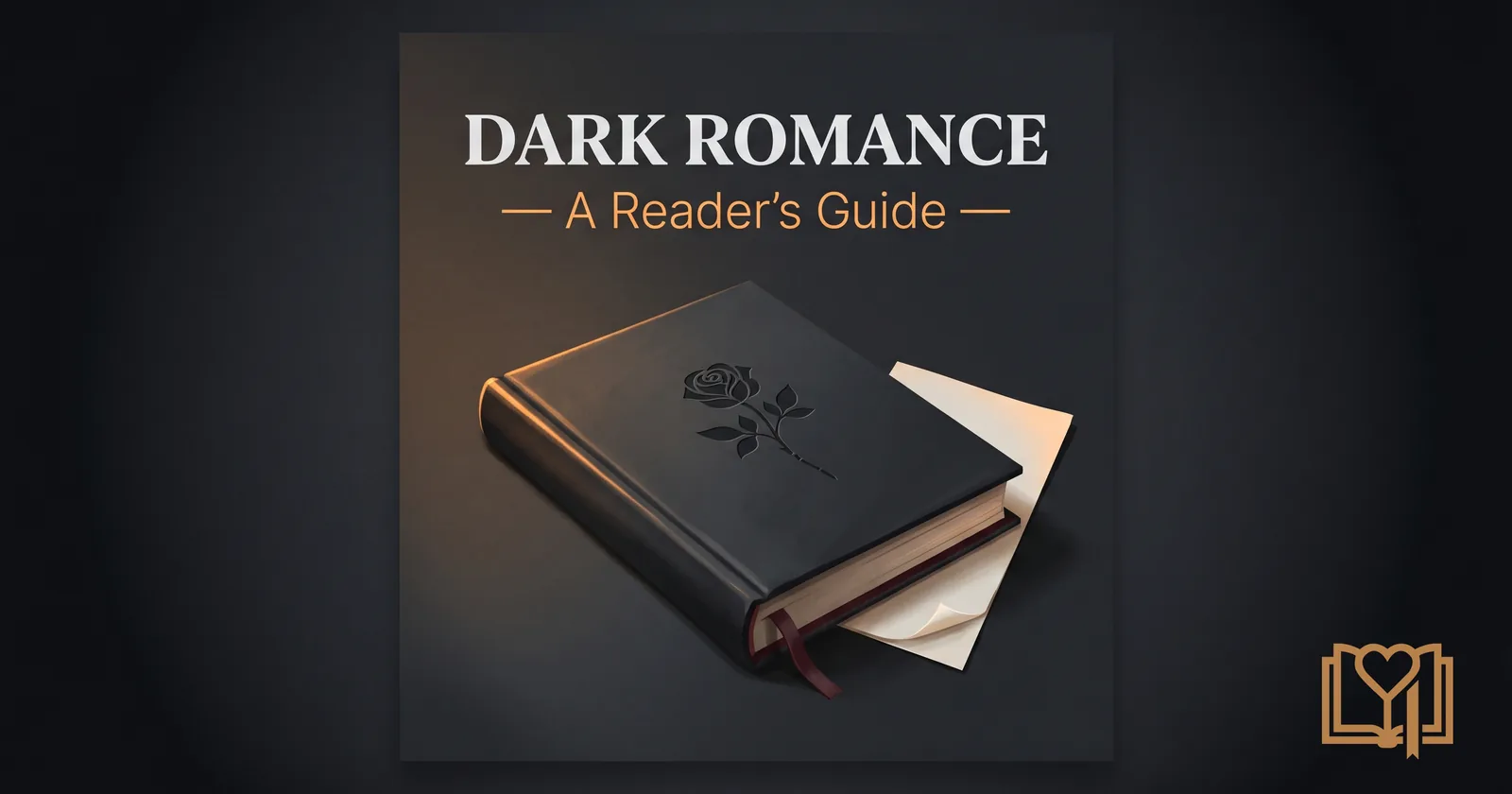
What Is Dark Romance? A Reader's Guide to the Genre
What dark romance actually is, where it came from, the tropes that define it, how to spot a good one — and where to start. A working guide for readers.
Contents
Dark romance is the most aggressively misunderstood genre on the shelf right now, and most of the misunderstanding is coming from people who claim to love it. The mainstream version — black covers, bone-white serif titles, content warnings stacked into a stylized brick — has flattened the conversation into a vibe. Half the books wearing the label are not the thing; half the readers reaching for it are reaching for something else entirely.
This guide is for readers who want to actually read in the genre, not just shop in it. We'll define what dark romance actually is, where it came from, what separates the books that work from the books that don't, and which titles in our library will give you a working sense of the range.
What dark romance actually means
Dark romance is romance that refuses to file off its edges. The hero is dangerous in ways that aren't always metaphorical. The heroine isn't broken; she's pressured, watched, sometimes cornered — and her choices under that pressure are the actual story. Consent is the genre's central question, not its blind spot, and the books worth reading treat it that way.
The hard romance rules still apply. There is an emotional payoff. There is a clear ending. Two people choose each other, eventually, on terms they can live with. Dark romance doesn't break the contract with the reader; it makes the contract harder to fulfill, and earns it anyway.
What it is not: horror in a corset, abuse with a soft filter, or a license to write whatever. The genre's good practitioners are unusually careful — they signal content, build the people inside the danger, and earn the moments that work. The bad practitioners are doing what bad genre writers always do: skipping the work and hoping the aesthetic carries the rest.
The history of dark romance
The genealogy runs through gothic romance — du Maurier, the Brontës, the long tradition of stories where desire was allowed to be uncomfortable and the house itself was a kind of antagonist. It runs through bodice rippers and the captivity romances of the seventies and eighties, which most contemporary readers haven't read but whose ghosts are still in the room. It runs through paranormal romance's vampire decade, where "dangerous hero" got rehearsed at industrial scale.
The current wave's mainstream moment runs from Fifty Shades through Captive in the Dark by CJ Roberts to the post-2020 BookTok explosion — Ana Huang's Twisted Love, H.D. Carlton's Haunting Adeline, Penelope Douglas's Corrupt, Rina Kent's backlist. Each of those books became shorthand for a different temperature within the genre, and a generation of newer readers maps the whole shelf against them.
What's new is the volume. The current wave is louder, more explicit, and more self-aware than its predecessors. Authors signal what they're doing, readers organize by trigger warnings rather than by genre code, and BookTok will put a clip of the right scene in front of three million strangers in a weekend. The genre's tropes are very old. The willingness to name them out loud is new.
That self-awareness cuts both ways. The good version is a contract between writer and reader — the warnings are real, the writing earns the heat, the ending pays for the discomfort. The bad version uses the warnings as branding and the warnings are the whole product.
Common dark romance tropes and what they actually do
Underneath the aesthetic, dark romance is doing specific emotional work. Naming the tropes helps you find the books that scratch what you're actually after — and helps you spot the ones that are just wearing the badge.
The captor-saviour pull. The hero is both the cage and the only thing keeping the heroine alive. The fantasy is not the captivity; it's being completely seen by someone who refuses to look away. Done well, this lands as devotion in a register the genre's softer cousins can't reach. Done badly, it's just abuse with a heart-shaped frame.
Then there's the obsessive hero — called the stalker hero in its sharper form, sometimes filed under morally grey or possessive or anti-hero depending on which edge the author wants forward. He notices her before she notices him, has plans she doesn't know about, and the fantasy is being the single point of focus for someone who could have anyone. The unease is the price of admission, and the good versions earn it rather than wave it away. What changes between labels isn't the dynamic but the angle: how much of the danger is pointed at the world, and how much is pointed at her.
The forced-proximity premise. Marriage of convenience, arranged marriage, witness protection, a debt that has to be paid, an enemies-to-lovers setup with stakes higher than wounded pride. The mechanism varies. The function is the same: it removes the escape valve that contemporary romance usually keeps open, and forces both characters to negotiate with each other instead of around each other. Dark romance leans on these premises because the genre's intensity needs a real-world reason for two people to stay in a room.
Power imbalance is the fourth axis: age gap, boss-employee, captor-captive, mafia-civilian, monster-mortal. The fantasy isn't the imbalance itself but the recognition that it forces an honesty most relationships never have to face — there's no room left to perform symmetry. Good versions know that and write into it. Bad versions treat the imbalance as decoration and call it a day.
If you walk away from a book unsure what the appeal was, ask which of these the writer was actually attempting. The misses usually live in the gap between what the cover promised and what the prose delivered.
How spicy is dark romance?
Mostly very. Dark romance leans open-door rather than closed-door — explicit content is the default expectation, not an upgrade. The intensity of the rest of the book usually maps to the intensity of the on-page heat, though not always. Some authors write the violence sharp and the sex tender; some write both at full saturation; a few work in the slow-burn end and keep the heat compressed.
Content warnings are part of the genre's vocabulary, not a deviation from it. Dubcon, noncon, primal play, breeding, knife play, degradation, somnophilia — the trope inventory of the harder end is long and the books that go there name what they're doing up front. The reader's job is to read the warnings and decide; the writer's job is to make them honest. Books that warn for everything and then deliver something milder are misreading the audience as much as the books that warn for nothing and then go hard.
If you're cross-shopping from contemporary romance and the spice level is the variable you care about most, start with the slow-burn end of the dark romance shelf rather than the harder picks. The emotional intensity lands without the heaviest content, and you'll calibrate from there.
How to spot a good dark romance book
A few markers, after a few years of pattern-matching across the genre:
Good dark romance has a heroine with a working spine. She doesn't have to win every confrontation, but she has to be a person with reasons, not a vehicle for the hero's character development. If you can swap her out for any other woman in the genre without breaking the plot, the book is failing her.
Violence has to be consequential. People who hurt each other on the page leave marks on the page. If a hero is dangerous in chapter three and forgiven by chapter five with no work shown, you're not reading dark romance; you're reading a hero whose darkness is a costume.
The content warnings have to be honest. A warning isn't a brand badge or a dare — it's an invitation to the reader who wants this and a courtesy to the reader who doesn't. Books that warn and then deliver something milder are misreading their audience; books that don't warn and then deliver something brutal are doing real harm.
Finally — and this is the one most often missed — the writing has to trust the reader. It doesn't moralize or apologize, and it doesn't break the fourth wall to reassure you that the author knows this isn't a real-life relationship model. The audience is adult and the frame is a story.
The midlist, as always, is more reliable than what's trending in any given week. Authors with three or four books in the genre have figured out their craft. Debuts catching fire on TikTok are sometimes great and sometimes the publishing version of a sugar rush.
The best dark romance books to start with
These five give a working tour of the range — the clean entry, the mafia-stakes version, the psychological end, the sharpest cut, and the slow burn that proves the genre carries tenderness too. Read in any order; they're not a sequence.
№ 01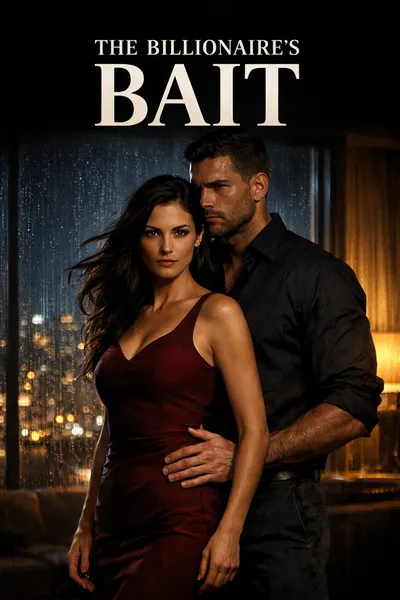
The Billionaire’s Bait
The clean entry point. Every central element of the genre — obsessive hero, captor-saviour pull, the romance that refuses to apologize for any of it — turned to a workable temperature.
Read on Great Novels →Tessa opens the wrong email and finds out her boss is a criminal. He doesn't fire her or threaten her. He rebrands her instead — overnight, she's his protégée and his alibi, the only person in the room who knows what he is. The book runs on the gap between what she's signed up for and what she's actually inside.
№ 02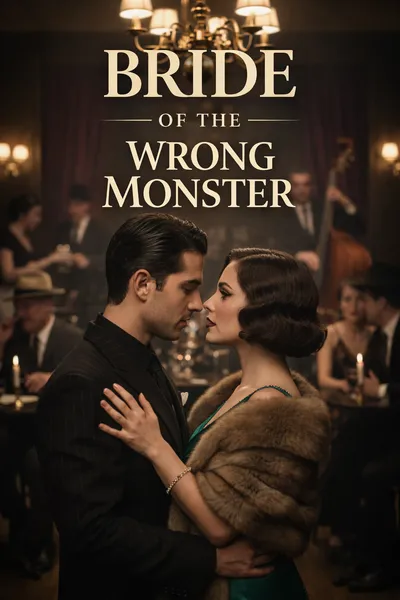
Bride of the Wrong Monster
Forced marriage with mafia stakes layered on top. The genre's danger written into the premise itself, not the lighting.
Read on Great Novels →Five years ago, Chloe robbed a dying man in an alley. Now he's at her door, holding a marriage certificate with her name on it, and the bracelet she thought she'd hidden forever. The premise hands her the entire genre at once — the secret, the debt, the man who has already decided how this ends.
№ 03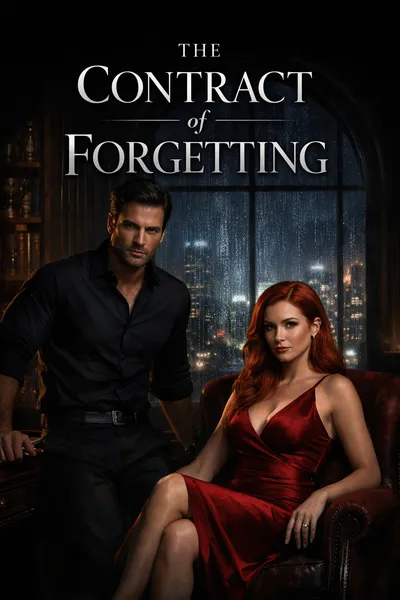
The Contract of Forgetting
The psychological end of the genre — memory, contract, and obsession braided so tightly you stop trying to separate them.
Read on Great Novels →Ayla wakes up in the arms of a stranger who claims he's saving her. He also claims he used to know her better than anyone — before he paid to take that knowledge out of her head. Every conversation in this one is haunted by what she can't access, and the central tension isn't will-they-won't-they but what happens when the missing memory comes back.
№ 04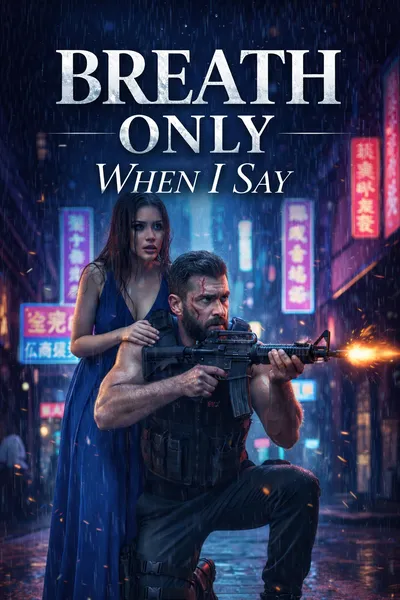
Breath Only When I Say
For readers ready for the sharpest version of the genre. A ghost in tailored black, a mafia princess in his charge, and not a single soft edge on either of them.
Read on Great Novels →Ariana survives the explosion that should have killed her, and her father responds by chaining her to his coldest enforcer. Killian runs her protection like a war zone — no parties, no friends, no choices — and the book never softens what that means for either of them. Heavy themes; the warnings exist for a reason. Read it when you want the genre at full volume.
№ 05
Shield of Glass
The slow-burn protective version — proof that dark romance can hold tenderness without losing the teeth that brought you here.
Read on Great Novels →Maya has spent her life trying not to be seen. A late shift, a wrong turn, and she becomes the only witness to a crime no one survives knowing about. The bodyguard assigned to keep her alive is a man whose career ended badly enough that the agency only sends him out for the cases no one wants. The romance unfolds in the silences — long, deliberate, earned.
If you work through these and want to go further, our full dark romance shelf in the app runs deeper than this list — every kind of morally grey hero the genre has invented, plus the ones it's still working out.
Find your next obsession
Hundreds of serialized novels. Read free, one chapter at a time.
FAQ