By the time I realize the email isn’t meant for me, it’s already open.
The glow of my monitor paints my cubicle in cold blue, making the gray fabric walls look like something out of a morgue. Everyone else has cleared out for the night; the distant hum of the air-conditioning and the occasional ding from an elevator are the only sounds left on the twenty-seventh floor of Cole Global’s headquarters.
I’m supposed to be reconciling quarterly data discrepancies. I am not supposed to be reading a confidential attachment addressed to "cole.executive@private" that somehow landed in "tessa.ward@coleglobal" instead.
But there it is. My cursor hovers over the PDF title: "Asset Flow – Black Ledger." A red flag icon sits next to it like a tiny warning siren.
I should delete it. Or at least forward it to IT, pretend I never saw it. This is exactly the sort of thing sensible, invisible people ignore.
Instead, my finger twitches. The file opens.
Pages of tables populate the screen, neat rows of numbers, code names, and off-shore account strings. My brain automatically falls into analysis mode—because numbers are safe, predictable—but the headings stop me cold.
"Unreported Disbursements." "Off-Book Security Operations." "Containment Events."
I scroll. There are references to shell companies I vaguely recognize from the legitimate side of the business, and others I absolutely do not. A note in the margin stands out, barely more than a scribble: "AC approval – cleanup authorized."
AC.
Adrian Cole.
The air in my lungs turns sharp and thin. I press my hands flat on the desk, trying to ground myself in the cheap laminate. The cursor blinks over a line item labeled "Target neutralized – no media exposure." A date. A city. A dollar amount that looks an awful lot like blood money.
No. No, there has to be an explanation. Some kind of internal security audit. A stress test. An elaborate hoax.
Except we don’t do hoaxes here. We do quarterly earnings calls and PR campaigns and glass-walled boardrooms where men like Adrian Cole talk about "value creation" while the rest of us try not to make eye contact.
My pulse is hammering now, heavy enough that I can feel it in my ears. I scroll down to the footer, to the document’s metadata.
Author: A.Cole
My hands go cold. The room feels suddenly too big, all that empty office space beyond my little cube, all those dark windows looking out over a city that keeps moving no matter who disappears.
I have to get this off my screen. I move to close the window—and my mouse slips. The cursor stutters, highlighting a block of text instead. My laptop makes a soft, traitorous chime as it auto-saves the document to my recent files.
"Shit," I whisper.
The sound of my own voice startles me. I almost never speak out loud when I’m alone; it’s safer that way. Fewer echoes.
I delete the file from my downloads, then empty the recycle bin. It’s still in my recent documents. I force myself to breathe, in, out, counting to four like my therapist once taught me.
Then I do what I always do when I panic: I make a backup.
My hand reaches for the small external drive hidden behind my monitor, the one nobody knows about. It’s a ridiculous habit—hoarding copies of innocuous emails, minor policy changes, payroll adjustments. A private archive of things other people shrug off.
Except this isn’t innocuous, and my hand is shaking.
"You are not a whistleblower," I mutter, fingers curling around the cool plastic of the drive. "You’re just… thorough."
I plug it in and save the file. One copy. Just in case. Just so I’m not crazy tomorrow when my memory starts trying to convince me I imagined all this.
The loading bar creeps across the screen. My heart counts each second.
Transfer complete.
I yank the drive out, slip it into the hidden pocket sewn into the lining of my tote bag. My throat feels tight, sweat prickling between my shoulder blades beneath my cardigan. I close the document. Clear my inbox.
Log out.
The elevator ride down feels longer than usual. The mirrored walls throw my reflection back at me from four angles: brown hair scraped into a low, no-nonsense bun, gray cardigan, sensible flats. The kind of woman you’d never pick out of a crowd if your life depended on it.
I’ve built my entire existence around that fact.
When the doors open into the glossy marble lobby, I nearly collide with someone.
"Sorry," I blurt, stepping back.
A man fills the elevator doorway like it belongs to him. Tall. Broad shoulders under a tailored charcoal suit that probably cost more than my monthly rent. Dark hair, precise cut. A face I’ve seen a hundred times on screens and magazine covers but never this close.
Adrian Cole.
He smells like something expensive and understated—cedar, citrus, steel. The security guard at the front desk straightens instantly, posture shifting from bored to alert.
"Ms. Ward," Adrian says, and my name in his mouth is the strangest thing I’ve heard all week.
I force my features into the blandly polite expression I wear to performance reviews. Invisible. Neutral. Forgettable.
"Mr. Cole," I manage, stepping to the side to let him enter.
Except he doesn’t move past me. He stays there, blocking my exit, eyes drifting down to the ID badge clipped to my cardigan, then back up to my face.
His eyes are lighter than they look in photos. Gray, very clear, assessing. Almost kind, if you didn’t know better.
"Burning the midnight oil?" he asks. His tone is warm, threaded with practiced charm. The kind that makes people lean in.
"End-of-quarter cleanup," I say, my voice steadier than I feel. "Just… tying up loose ends."
Something flickers behind his gaze. The corner of his mouth curves.
"I appreciate dedication," he says softly.
The way he says it makes it sound like a promise and a threat at the same time.
"Let me give you a ride down," he adds, stepping into the elevator with me instead of going up. The doors slide shut behind him, cutting us off from the lobby and any witnesses.
The elevator hums back to life, numbers ticking down. I fix my stare on the panel like it’s the most fascinating thing in the world.
"How are you finding the work in Data Integrity, Ms. Ward?" he asks.
He shouldn’t know my department. There are five hundred people in this building.
"It’s… good," I say. "Fulfilling."
A soft huff of amusement. "Fulfilling. That’s rare."
His reflection watches me from the mirrored wall. I don’t trust my voice enough to answer.
"We rely on people like you," he continues, voice smooth. "Quiet. Precise. The backbone of everything the world sees when they look at Cole Global."
My skin crawls. He knows. Of course he knows. This building is his body; every email, every keystroke is a nerve.
"I’m just doing my job," I murmur.
The elevator slows. Ground floor. The doors slide open with a soft chime.
He doesn’t step out.
"Ms. Ward," he says, and I can feel his gaze, heavy as a hand between my shoulder blades. "Before you go—could you stop by my office tomorrow morning? Let’s say… nine sharp. I’d like to discuss a new role for you."
My tongue sticks to the roof of my mouth. A new role. That’s how they phrase it in restructures, right before half your team is "invited to explore opportunities elsewhere."
"Yes, sir," I say, because what else is there.
His smile is bright, admiring, too white. "Good girl."
The words land like a collar.
He steps out then, walking toward the private entrance where a waiting car idles at the curb. I escape in the other direction, my flats whispering over the marble like they’re afraid to leave marks.
Outside, the night air is damp and cool against my overheated skin. The city sprawls around the skyscraper, neon and headlights and the low growl of traffic. I clutch my tote closer, the small weight of the hidden drive suddenly enormous.
I make it home on muscle memory: subway, short walk, second-hand buzzer that always sticks. My apartment smells faintly of coffee and old books. Safe. Small.
I lock the door. Then lock the chain. Then test both, twice.
The drive goes into the false bottom of my underwear drawer, under a nest of mismatched socks. Ridiculous. Paranoid. Exactly what has kept me out of trouble my entire life.
Until today.
Sleep doesn’t come easily. I lie on my back in the dark, listening to the radiator tick and the neighbors argue through thin walls. Every time I close my eyes, I see gray eyes, a red flag icon, a line that reads "cleanup authorized."
By morning, my head throbs behind my eyes, and my stomach is a tight knot of acid. I dress carefully: black slacks, navy blouse, the cardigan that makes me look like someone’s harmless aunt. I pick the least noticeable lipstick: barely-there rose.
Nine a.m.
His assistant ushers me into the outer office with a professional smile that doesn’t reach her eyes. Everything up here on the top floor is glass and chrome and understated wealth. Adrian’s office door is opaque, the only solid thing in a world of transparency.
"He’s ready for you," she says.
My hand leaves a faint print of moisture on the sleek handle.
The office is larger than my entire apartment. Floor-to-ceiling windows overlook the city, light spilling across dark wood and leather. Adrian stands by the window with his back to me, suit jacket off, white shirt sleeves rolled up over tanned forearms.
"Tessa," he says without turning. First-name now.
"Mr. Cole," I reply, hovering just inside the door.
"Come in," he says, gesturing toward one of the chairs in front of his desk. "Close the door, please."
The quiet click as it shuts sounds final.
I sit, smoothing my hands over my knees under the desk so he won’t see them tremble. He takes his time crossing the room, like we’re in a scene he’s rehearsed and I’m the only one who doesn’t know my lines.
He leans against the edge of the desk instead of sitting behind it, putting himself close enough that I can see the faint stubble along his jaw, the expensive watch hugging his wrist.
"You received something last night that wasn’t intended for you," he says.
No preamble. No deniability. My heart stutters.
"I… I deleted it," I say quickly. The truth, mostly. "It was clearly misdirected. I assumed IT—"
"IT flagged the misroute," he cuts in, watching my face. "But not before the document was opened. And then saved to an external device."
Cold sprays down my spine.
"We monitor endpoints, Tessa," he says gently, like he’s soothing a skittish animal. "We have to, given the nature of some of our operations."
Operations. Not crimes.
"I don’t understand," I whisper, because I don’t want to.
He tilts his head, studying me. "I think you do. You’re very good at what you do. That’s why this is…" His lips curve. "An opportunity."
My laugh comes out thin and disbelieving. "An opportunity. To… what, exactly? Lose my job?"
"On the contrary." His eyes sharpen. "You’re now one of the most valuable assets in this building."
He pushes off the desk and moves behind it, finally sitting. The shift restores the hierarchy—him elevated, me low.
"The information you saw is… sensitive," he says. "There are people who would kill for it. Or kill to keep it buried."
"Are you one of those people?" I hate that my voice shakes on the last word.
His smile doesn’t falter, but something in his gaze goes flat. "If I wanted you gone, Ms. Ward, you wouldn’t be sitting in my office."
My fingers curl into my palms hard enough to leave half-moons.
"So what do you want?" I ask.
"To keep you alive." He lets the words hang between us like a gift. "And by extension, to keep certain… parties… from using you to get to me."
"I’m no one," I say, almost pleading. "I’m not important enough for—"
"You opened the file," he says softly. "You backed it up. That makes you important."
The fact that he sounds almost admiring makes me want to be sick.
"I’m putting you under protection," he continues. "Effective immediately. You’ll be assigned a personal security detail. You’ll move to a safer residence—company-owned, of course. Until we’re sure any potential threat has been neutralized."
I shake my head. "I can’t just… upend my life. I have a lease—"
"We’ll handle it." His tone brooks no argument. "This isn’t a negotiation, Tessa. This is risk management."
"For you," I say before I can swallow it back.
His eyes flash, and for a second I see the predator underneath the polish. "Don’t make the mistake of thinking your interests and mine are mutually exclusive. If something happens to you, the fallout touches me. That’s… unacceptable."
My skin feels too tight. "What does ‘protection’ mean?"
"It means you’ll have someone with you," he says. "At all times. Someone who understands the nature of the people we’re dealing with."
A knock sounds on the door. My muscles jerk so hard the chair squeaks.
"Come in," Adrian calls.
The door opens. The man who steps through is almost comically out of place in this sleek, curated office.
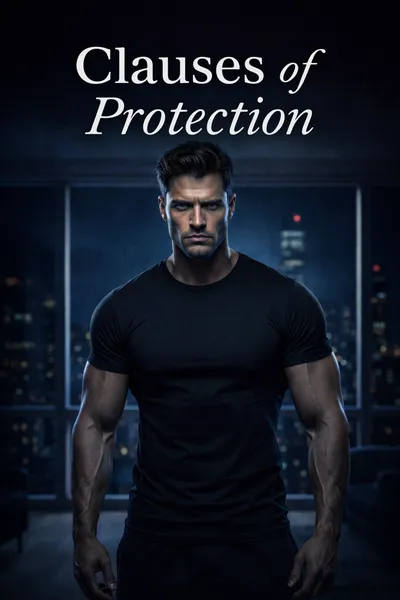
He’s tall, broader than Adrian, filling the doorway with solid muscle wrapped in a black T-shirt and worn jeans instead of a suit. Tattoos curl over his forearms and crawl up his neck, dark lines against tan skin. His jaw is square, mouth unsmiling, dark hair cut short on the sides. A thin scar bisects his right eyebrow, pulling slightly when he frowns.
His eyes are what get me, though. Dark. Flat. Watchful. Like he’s measuring exits without even turning his head.
I know him.
Not personally, but by reputation. Whispers in the break room. That guy you don’t make eye contact with in the underground parking garage.
Jaxon Reed.
"You wanted me," he says to Adrian. His voice is low, rough, like gravel.
Adrian gestures lazily in my direction. "This is Tessa Ward. She’s now a protected asset. You’re her shadow until I say otherwise."
Shadow. The word slams into my ribs.
Jaxon’s gaze slides to me, slow and indifferent. It moves over my blouse, my cardigan, my small, stiff posture, then returns to my face. No flicker of recognition. Just assessment, like I’m a package he’s been asked to transport.
"She doesn’t look like much," he says.
Heat floods my cheeks. I bite down on my tongue to keep from defending myself. Invisible people don’t pick fights with men like him.
"That’s the point," Adrian says. "You’ll find the details in the brief I sent. For now, consider her high priority. Word may already be out that there’s a leak."
A muscle in Jaxon’s jaw tightens. His eyes shift back to me, something harder now in their depths. "Is she the leak?"
"She’s the bait," Adrian says smoothly. "And your job is to make sure the sharks don’t get to her before I do."
My stomach drops out.
"Wait," I say, my voice thin and distant in my own ears. "Bait?"
Adrian’s smile returns, bright and cold. "Figure of speech. Don’t be dramatic, Tessa. Jaxon will keep you safe. It’s what he does."
Jaxon doesn’t contradict him. He just stands there, broad and immovable, as if the decision has nothing to do with him either.
"I don’t want this," I whisper, more to myself than anyone.
"Wanting is irrelevant," Adrian says. "Survival, on the other hand… is not."
He turns to Jaxon. "She’s due back at her apartment in an hour to pack. Take her. Stay with her. From now on, if she breathes, you’re there."
Jaxon’s mouth twists, like the order tastes bad. But he nods. "Got it."
He steps aside from the door, waiting. For me.
I stand on shaky legs. The room tilts for a heartbeat, then steadies. As I pass Adrian’s desk, his voice follows me.
"Tessa."
I look back.
His gaze is all polished concern again. "Try to relax," he says. "You’re safer now than you’ve ever been."
The worst part is, I think he believes it.
I walk out of the office with a convicted felon at my back and a billionaire’s promise wrapped like barbed wire around my throat, and for the first time in my small, carefully unobtrusive life, I understand what it feels like to be visible.
In the elevator, it’s just the two of us. The air between us feels thick, charged. I can feel his attention like heat on my skin, even though he’s standing a deliberate step away.
"So," he says at last, eyes on the descending numbers. "Tessa Ward. Guess we’re stuck with each other."
I swallow hard and force myself to meet his reflection in the mirrored doors.
"Are you going to keep me safe," I ask quietly, "or just make sure I die on schedule?"
His gaze cuts to mine, sharp and startled, like he didn’t expect me to have teeth.
For a breath, neither of us looks away.
"Depends," he says, voice low, something dangerous curling around the word. "On whose schedule you think you’re on."
The elevator dings. The doors slide open.
He gestures for me to step out first, his expression unreadable. I do, every cell in my body braced, wondering which will be worse: the danger outside, or the man they’ve put between me and it.