By the time Ethan Marino says my name, the entire lecture hall has already turned to look at me.
“Ava Rossi’s argument,” he says smoothly, “rests on a misreading of the evidentiary record. Again.”
The word again drops like a coin in a jar. They’re all waiting to see if I’ll shatter it.
I’m halfway up the stairs, still in my coat, coffee burning my palm. First week of term, first session of Advanced Evidence, and Professor Bennett has already thrown us the grenade: the decade-old treason case, the one that ended a war and killed my father. I should have been ready for Ethan. I’m always ready for Ethan.
I force my legs the rest of the way to my usual seat, third row from the back, edge aisle—perfect angle to see him and not see him.
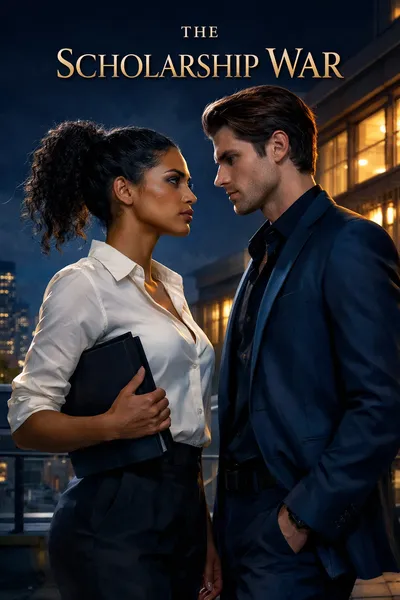
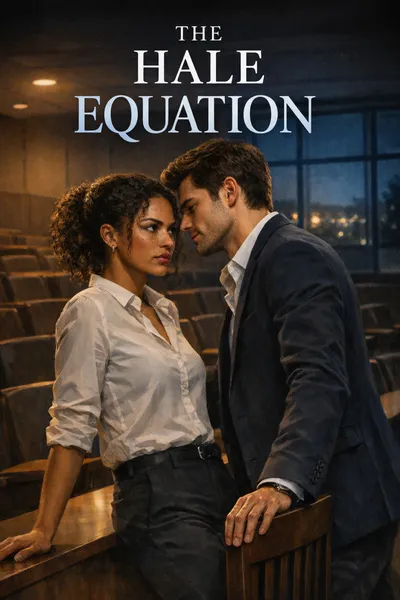
He’s standing during question period, tall, unfairly put together in a navy blazer and an expression like this is all mildly boring. Marino face, law-school edition. A couple of 1Ls craning in the doorway whisper his name like it’s a brand.
Professor Bennett leans back on the edge of her desk, arms folded. “Specifics, Mr. Marino.”
Ethan doesn’t look at her. He looks directly at me.
“Ms. Rossi argued that the anonymous informant’s testimony was the linchpin for the prosecution’s theory of Russian interference.” His voice is even, carrying to the back. “But the authenticated cables in Exhibit L contradict that timeline. If she’d followed the chain of custody, she’d see that.”
My shoulders go rigid. I have followed the chain of custody. I know every page of that file like it’s scripture and blasphemy at once.
I make myself unbutton my coat, slow. “If Mr. Marino had actually read the authenticated cables, instead of just admiring the embossed seal on the cover, he’d know they were logged four days after the informant’s first interview.”
A low ripple moves through the room. They love this. Our feud is free theater with footnotes.
Bennett’s gaze flicks between us, sharp as a scalpel. “Show us, Ms. Rossi.”
Of course she does this. I set my coffee down, step down the row to the aisle. My boots click too loudly on the steps as I descend, heart beating against my ribs, hot and inconvenient.
The screen at the front shows the digital image of Exhibit L. I don’t need it. It might as well be burned into the backs of my eyes. Still, I take the laser pointer from the podium and circle a small block of text on the projection.
“Page sixty-three,” I say. “Log entry by Special Counsel Hart. ‘Cables received and authenticated following preliminary debrief with C.I. — see Interview 1A.’ Which occurred on March seventeenth.” I glance over my shoulder at him. “The cables can’t undermine a testimony that predates them. Unless Mr. Marino has invented time travel in addition to legacy admissions.”
Someone chokes on a laugh; someone else makes the low ooooh sound you only hear in classrooms and schoolyards.
Ethan’s jaw tightens just enough for me to notice. “You’re assuming the informant wasn’t coached before the official debrief,” he replies. “Which is, at best, generous. At worst, naive.”
“Careful.” I let the pointer rest on the word authenticated. “If you suggest the prosecution manufactured consistency between the informant’s statement and foreign intelligence, you’re calling the peace agreement into question. And I thought Marinos liked the peace.”
The air changes. It always does when one of us brushes too close to the real thing.
Ethan knows it. His eyes darken, but his tone doesn’t move. “I like proper evidentiary standards, Ms. Rossi. They’re more durable than ceasefires negotiated in smoke-filled rooms.”
Professor Bennett lifts a hand. “Enough.” She waits until the noise dies. The silence under her stare is worse than any shouting. “This is why we’re here. The record in a high-stakes case is never clean. Memory is plastic. Motives are layered. Neither of you is wrong about the vulnerabilities in Exhibit L. But if you turn this seminar into a proxy war, I will fail you both before the midterm. Understood?”
She says it to the room, but her gaze pins us.
I nod once. Ethan does the same, a beat later.
Bennett’s attention shifts back to the class. “Now. As I said before Ms. Rossi’s dramatic entrance—” a few chuckles, my cheeks sting “—this grant project will require more than clever jabs. It will require… restraint.”
I retake my seat, pulse still too fast. Ethan sits slowly, expression smoothed out, but I know I landed something. There’s a small, almost invisible nick in the armor today. Maybe it’s the mention of the smoke-filled rooms. Maybe he doesn’t like hearing his family named in the same breath as perjury.
Good.
Bennett clicks to the next slide. A new document comes up: The Marino Grant Initiative – Case Study: City of Bellona v. Marco Rossi.
My father’s name, twelve feet high.
The room goes so quiet I can hear the whir of the projector fan.
“Some of you applied for this grant because you like a challenge,” Bennett says. “Some because you like prestige. Some because you don’t know how to say no to an opportunity.” Her mouth tightens. “What you’re actually applying for is responsibility. For the next two terms, a select group will work on re-examining the evidentiary record in the treason case. You’ll collaborate with outside partners under strict confidentiality and produce a work product that could influence real-world policy.”
Hands go up. Questions about scope, about access, about travel. No one asks the thing clawing at the inside of my throat: will we see the sealed file? The parts that decided my father’s life in ten redacted pages.
Bennett answers efficiently, dodging the sealed-file question with a promise of “limited supervised access to classified materials.” I taste metal, like I’ve bitten my tongue.
“And,” she continues, “the dean has requested an innovative team structure. Given the… competing narratives surrounding this case, we’re going to test whether academic rivalry can be harnessed productively.”
A few people glance back at me. More look at Ethan.
“Two sub-teams,” she says. “Each will develop a comprehensive theory of the case and prepare for a culminating mock tribunal at the end of the year. Both teams will have access to the same core evidence, but different external advisors.” She turns, picks up a folder from her desk. “The co-captains have already been selected.”
My spine straightens.
She reads the first name. “Ava Rossi.”
The room exhales all at once, with a weird mix of satisfaction and dread. I don’t look at anyone. My eyes stay locked on the folder.
“And,” Bennett says, “Ethan Marino.”
I hear his slow inhale across the lecture hall. It might be my imagination, but it feels like the temperature drops a degree. I let my gaze slide sideways.
He’s already looking at me.
It’s not the practiced, bored expression he wears for most of class. It’s sharper. Assessing. Like he’s standing at the edge of a chessboard and someone just told him his opponent can move like a queen and a knight at once.
Bennett lifts a hand before the murmurs crest. “You will be co-captains of one project. On paper, your responsibilities will be separated: Sub-team A, led by Ms. Rossi; Sub-team B, led by Mr. Marino. You’ll have intermediaries who coordinate shared resources. Direct collaboration is, for various reasons, not possible.”
Her eyes flick to me, then to him. The look is too quick for anyone who doesn’t already know there’s a bomb under the table.
Dean Price. The treaty. The clause that turned my last name and his into opposing sides of a landmine.
Ethan raises his hand, posture crisp. “Professor, with respect, if the co-captains can’t confer directly, isn’t that an unnecessary handicap? Coordination through intermediaries increases the risk of miscommunication.”
“Welcome to law and politics, Mr. Marino,” Bennett replies. “Miscommunication is a feature, not a bug.”
Laughter, nervous and thin.
She gives us the details then—the application process, the expectations, the timeline. My pen moves by muscle memory, notes forming under my hand while my brain hammers out a single, ugly rhythm: They want me in the same arena as him. They want us to make this war entertaining again.
I should walk out. Demand a different assignment. Tell them I refuse to turn my father’s trial into a show.
Instead, when Bennett opens the floor for final questions, my hand goes up.
Her brow lifts. “Yes, Ms. Rossi?”
“Will sub-teams be allowed to challenge each other’s evidentiary theories in real time during the mock tribunal,” I ask, “or will rebuttal be limited to written submissions?”
A beat. Bennett’s mouth curves, the closest she gets to approval. “Oral rebuttal will be permitted.”
“Good.” I glance at Ethan deliberately. “I’d hate for any misreadings of the record to go uncorrected.”
This time, he smiles. It’s small, dangerous, and not polite at all.
“Likewise,” he says quietly.
When class ends, everyone floods the aisles at once, buzzing like we’ve just been handed front-row tickets to an execution. A couple of people toss me quick, half-sincere congratulations. Someone mutters “You’re going to kill him” in my ear and I don’t bother to ask if they mean academically.
I’m stuffing my notebook into my bag when a familiar elbow digs into my side.
“Well,” Nate says, “this is going to be fun.”
He’s grinning, messy hair flopping into his eyes, backpack slung over one shoulder at a perilous angle. Nate Caldwell: my favorite bad idea and the only person at this school who’s seen me ugly-cry over discovery motions.
“Define fun,” I say.
“Free access to sealed records, sanctioned academic violence, and your glorious ascension as co-captain of the Grant Hunger Games.” He bumps my shoulder. “You okay?”
I swallow. The projection of my father’s name is still ghosted on the wall in my mind. “Peachy.”
Nate’s smile fades a shade. “You don’t have to do it, you know. You could let Golden Boy have his trophy and stick to regular-degular law review.”
He knows I can’t. Knows why. He’s seen the copy of the partial file I keep hidden, the one that fell into my hands through channels I’ll never put in writing.
“I’m not letting a Marino write the official academic history of my father’s execution,” I say. The words taste like gunpowder. “If they want a show, I’ll give them one.”
“Attagirl.” He hesitates. “Just… don’t let them eat you alive for ratings.”
“I bite back.”
Nate studies my face for a second like he wants to argue, then decides against it. “Come on. I’ll walk you to Price’s office. You know she’s going to want a word.”
He’s right. Dean Elena Price has never seen a political lightning rod she didn’t want to wire to her office.
The dean’s suite is glass and dark wood, perched above the main atrium like a judge’s bench overlooking a very expensive ant farm. Students move below in organized chaos; from up here, they’re just threads in a pattern.
Her assistant doesn’t bother pretending I don’t know the way. “They’re waiting,” she says, even though Nate hovers behind me, attempting to radiate harmlessness.
They.
I push the door open.
Dean Price stands by the window, hands in the pockets of a tailored charcoal suit, gaze on the city skyline. Next to her, arms folded, is Sofia Marino.
My fingers curl involuntarily around my bag strap. I hadn’t expected Sofia, not this early in the semester. The last time I saw her up close I was thirteen, my grandmother’s hand hard on my shoulder at the back of a funeral parlor, and Sofia was speaking sotto voce to a prosecutor about closure and cooperation.
She turns as we enter, ageless and immaculate, her mouth shaping something like a smile.
“Ava,” she says. “You’ve grown.”
I want to tell her I’m not a houseplant.
Dean Price’s eyes flick to Nate, then back to me. “Mr. Caldwell, we’re having a confidential discussion.” Her tone is gentle, which is how you know it’s not a request.
Nate shoots me a look—Call me if you need an extraction—and retreats, the door closing softly behind him.
The room feels smaller without him.
“I didn’t realize this was going to be a family reunion,” I say.
Sofia tilts her head, amused. “We’re all family here, aren’t we, Dean?”
Price ignores the bait. “Sit down, Ms. Rossi.”
I don’t. “If this is about the grant, I’d rather talk to Professor Bennett. She’s the academic lead.”
“This isn’t about academics.” Sofia’s voice is velvet over steel. “It’s about risk management.”
Price exhales, a quiet thread of air. “Ms. Marino represents certain… stakeholders whose interests intersect with this project. She asked to be present.”
“Stakeholders,” I repeat. “Nice euphemism for people who ordered hits.”
Sofia’s smile doesn’t slip, but there’s a faint tightening at the corners of her eyes. “You always did have a talent for dramatization.”
“Your family always did have a talent for murder,” I reply evenly. “We all have our gifts.”
The silence that follows is very, very still.
Price steps between us metaphorically, if not physically. “The point,” she says, “is that this grant exists because the city believes in the story of the peace. The research can’t be seen as destabilizing that narrative. Not publicly.”
“Then you should’ve picked a different case,” I say. “Maybe a nice, boring antitrust settlement.”
Her mouth tightens. “It had to be this case. Symbolism matters. You know that.”
I do. The city runs on symbols as much as on money and fear.
Sofia studies me like I’m a deposition transcript she’s searching for weak spots in. “You will have an opportunity to demonstrate that your father’s choices, however misguided, were not without… context,” she says. “But you will not use this project to inflame old grudges. Do you understand?”
There it is. The quiet threat, wrapped in civility.
“Is that an instruction from the dean,” I ask, “or from the people who shot him?”
Sofia’s eyes flash, icy. For a second, the mask fractures and I see what Ethan must have grown up watching: weaponized control.
Price’s voice cuts in, firmer. “Ava. Sit.”
I do, more because my legs feel unsteady than because she told me to. The leather chair is too soft, like it might swallow me whole if I let it.
Price circles to the front of her desk, perches on the edge much the way Bennett did earlier, a mirror I don’t like.
“You’re here because you’re talented,” she says. “Because you’re relentless. And because you have skin in the game.” Her gaze holds mine. “The same is true of Ethan.”
I almost laugh. “Ethan has a polished reputation and stock options in blood money.”
“And a name that will be on any headline that comes out of this clinic,” she replies. “Legacy cuts both ways, Ms. Rossi. It makes you vulnerable too.”
Sofia speaks again, voice low. “There is a clause in the original agreement between our families.”
“I’m aware,” I say. “No formal contact, no documented collaboration, no joint ventures. The adults in the room were very worried that the children might grow up and do something inconveniently human, like forgive each other.”
A flicker of something—surprise?—crosses Sofia’s face. Price notices it.
“Who told you that?” the dean asks quietly.
“People who buried my father,” I say. “Word gets around in graveyards.”
Price presses her lips together. “Regardless of how you heard about it, the clause is real. If there is any official record of coordination between you and Ethan outside the parameters we’ve defined—”
“The peace is void,” I finish. “And everyone goes back to shooting in alleys. Got it.”
Sofia’s gaze sharpens. “Then you understand why your… spirited exchanges must remain within academic boundaries. No side deals. No back-channel cooperation. Anything that could be construed as a joint action would be… unfortunate.”
“For whom?” I ask. “Because from where I’m sitting, ‘unfortunate’ already happened.”
“Ava.” Price’s voice softens, threading in something like real concern. “I’m not asking you to like this. I’m asking you to survive it.”
The words land, heavy and unwelcome. For a moment, my anger has to fight through something else: the cold, unwelcome image of Luca’s body on a slab instead of my father’s. Or Nate’s. Or mine.
I look at Sofia. “What happens if I win?”
Her brows lift. “Academically?”
“In the tribunal. If my theory of the case beats Ethan’s. If I prove the official story’s a fairy tale with a body count.”
Her answer is too quick. “The tribunal is a pedagogical exercise. Not a referendum on history.”
Which means it’s exactly a referendum on history.
Price glances at the clock. “Applications are due in forty-eight hours. Bennett wants your preliminary theories in a week. You don’t have to accept the co-captaincy, Ava. If you walk away now, there will be no penalty. You can focus on other opportunities.”
Say no, something in me whispers. Walk. Let someone else bleed on that record.
But I see my father again, not in the courtroom grainy photo they show in documentaries, but in our kitchen, sleeves rolled up, translating case law at the table because he wanted me to speak both languages—street and statute.
“I accept,” I say.
Sofia’s eyes narrow, the slightest movement. Price closes hers briefly, like she both expected and feared that answer.
“Then understand this,” the dean says, opening them again. “You and Ethan will be at each other’s throats in that classroom. Publicly. That is the only safe place for your conflict. Do not give anyone reason to think you’re capable of aligning.”
I think of the way he looked at me when Bennett said co-captains. Like an equation he suddenly had to solve.
“I don’t align with Marinos,” I say. “You’re safe.”
The lie tastes thin even as I say it. Not because I plan to work with him—God, no—but because a part of me knows what they’re really afraid of isn’t collaboration.
It’s what might happen if two people who know where all the bodies are buried start digging in the same place.
Price seems content with my answer. Sofia, less so. She studies me as I stand.
“One more thing, Ava,” she says.
I pause at the door.
“Whatever history you think you know,” she says softly, “is only one version. Be careful how hard you dig. You may not like what you find about Marco.”
For a second, the room tilts. I clench my hand around the doorknob until my knuckles hurt.
“I’m not in this to like him,” I say. “I’m in it to tell the truth.”
Sofia smiles again, but there’s no warmth in it. “Truth is a luxury,” she murmurs. “Survival is a necessity.”
I step out before she can see whatever cracked across my face at that.
In the hallway, the glass wall of the atrium throws my reflection back at me: hair slightly mussed, eyes too bright, mouth a hard line. Somewhere below, students are laughing, oblivious, the normal life of the school humming along.
And across the atrium, on the opposite balcony, Ethan Marino stands alone, leaning on the rail, looking down at the same scene.
As if he feels my gaze, he glances up. Our eyes catch across the open space—too far to hear, close enough to feel like a wire snapping into place.
For a heartbeat, neither of us looks away.
Then he lifts his chin, a question or a challenge, I can’t tell.
I answer the only way I know how.
I smile like I’m already planning how to destroy him in front of everyone.
His mouth curves, slow and sharp, like he’s thinking the same thing.
The city’s peace rests on us never being on the same side of anything.
Standing there, staring at him, I’m not sure whether that makes this project safer—or infinitely more dangerous.